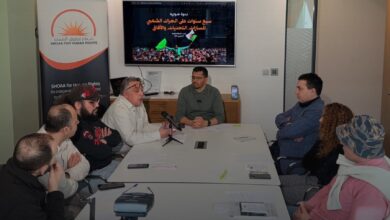
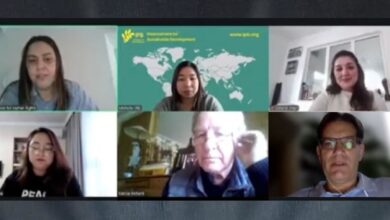
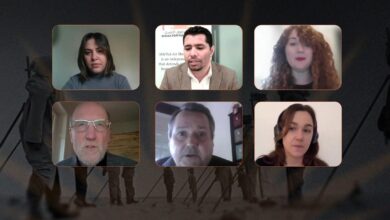
On November 28th, 2025, SHOAA for Human Rights hosted a high-level webinar entitled “Silenced Dissent: The Human Rights Situation in Algeria Today”, gathering key experts and international actors to unpack the structural repression facing Algerian civil society today. From shrinking civic space to digital repression and the misuse of counter-terrorism laws, panelists provided a multi-dimensional picture of the crisis, as well as pathways for advocacy and solidarity.
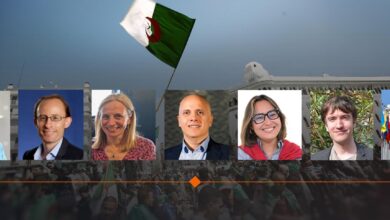
Moderated by Imène Hmili, the webinar featured six distinguished speakers representing international NGOs, human rights mandates, legal associations, and advocacy networks: Sarra Zidi, Advocacy and Communications Officer at HuMENA; Kamel Sedra, Managing Director of EduCYBER; Alexis Thiry, Legal Advisor at MENA Rights Group; Debra Long, International Policy Manager at the Law Society of England and Wales; Carlos Nagore, Consultant with the UN Special Rapporteur on Freedom of Expression (OHCHR); and Loana Benjamin, Human Rights Officer with the UN Special Rapporteur on the promotion and protection of human rights while countering terrorism (OHCHR).
Sarra Zidi opened the webinar with a broad overview of the civic space trajectory in Algeria since the 2019 Hirak movement. She traced how initial optimism gave way to an entrenched system of repression under President Tebboune, marked by arrests, legal restrictions, and the targeting of activists.
“For many, the Hirak represented a moment of historic possibility, a chance for Algerians to turn the page on a long-standing authoritarian legacy. Yet the period that followed, under the leadership of Abdelmadjid Tebboune, witnessed a sustained narrowing of civic space, echoing familiar patterns of constraint. Nonetheless, it is important not to yield to cynicism, for history reminds us that dissent and principled defiance often stand as the first steps toward progress.”
Kamal Sedra focused on the increasing risks facing civil society in the digital sphere. He highlighted how digital repression, including surveillance and unsafe communication practices, poses a major threat to HRDs, especially in a context where digital security literacy remains limited.
“No activist or NGO can defend human rights while remaining vulnerable online. With even basic cyber hygiene still lacking in many organizations, establishing clear and practical cybersecurity policies has become essential, not only to protect their work and the people they serve, but also to protect themselves.”
Alexis Thiry presented the findings of MENA Rights Group’s latest report on the Algerian government’s use of travel bans against critical voices. The report documents how authorities have systematically weaponized border controls to isolate activists and punish dissent.
“Far from being neutral administrative tools, travel bans in Algeria operate as a powerful mechanism of repression. They undermine the Constitution and breach Algeria’s obligations under the ICCPR, functioning as tools of isolation and intimidation that shrink civic space and create a form of internal confinement for those exercising their fundamental rights. Their widespread and arbitrary use also generates a profound chilling effect, discouraging peaceful civic engagement and silencing critical voices.”
Debra Long addressed the deteriorating environment for lawyers in Algeria, underscoring how legal professionals defending political prisoners are themselves being judicially harassed. She emphasized the wider impact of this trend on access to justice and rule of law.
“Across Algeria, every act against lawyers is an act against access to justice. When those who defend rights are silenced, the rights of all Algerians are put at risk.”
Carlos Nagore spoke in his capacity as a member of the Secretariat of the UN Special Rapporteur on Freedom of Expression. He explained the procedures of the mandate, how civil society can engage it, and what protections are available to those experiencing violations.
Loana Benjamin detailed how counter-terrorism frameworks, when not aligned with international standards, are increasingly being misused against peaceful dissent. Her remarks highlighted the relevance of Pillar IV of the UN Global Counter-Terrorism Strategy in the Algerian context.
“Imprecise definitions have facilitated the weaponisation of counter-terrorism frameworks including against political opponents, minorities, civil society actors, labour unions, activists, and human rights defenders. International standards, including Pillar IV of the UN Global Counter-Terrorism Strategy, make clear that counter-terrorism measures must never be used to target political opposition, civil society, or dissent.”
The webinar underscored that Algeria’s human rights crisis is not unfolding unnoticed. From the targeting of activists and lawyers to the misuse of digital surveillance and counter-terrorism laws, the speakers emphasized that repression is systematic, but so is resistance.
Through powerful presentations and shared insights, the panel demonstrated that documentation, legal advocacy, and international solidarity remain essential tools to counter authoritarian trends and protect civic space.
SHOAA reaffirms its commitment to standing with Algerian human rights defenders, supporting their efforts, amplifying their voices, and working to ensure their rights are protected across borders.