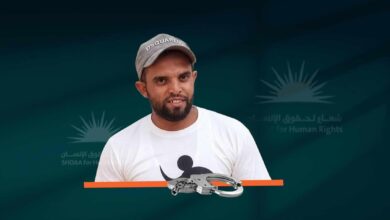
On 29 August 2026, the Tlemcen Court sentenced rapper Zakaria Kara Slimane, known professionally as ZD4, to one year in prison, ordering his detention following a fast-track trial over a rap song he released in June 2026. He faced several charges, including the offence of insulting the President of the Republic.
Police in Tlemcen arrested ZD4 on 28 August 2026. He was questioned and held in police custody until the following day, when he was brought before the public prosecutor at the Tlemcen Court, who referred him for immediate trial. That same day, he was sentenced to one year in prison and taken into custody.
The song at the centre of the prosecution addressed social and political conditions in the region, including marginalization, social injustice, poverty, and irregular migration, with a particular focus on the Algerian and Moroccan peoples. ZD4 portrayed both peoples as facing similar social hardships and described how difficult living conditions and a lack of prospects push some young people on both sides to risk irregular migration by sea in search of a better future.
Against the backdrop of political tensions between the two countries, the song also conveyed a message calling for closer ties between the Algerian and Moroccan peoples rather than fueling division and hostility between them. ZD4 presented rap as a means of expressing social realities and delivering a message capable of bringing people together, rather than as a tool for rivalry or ridicule. He made clear in the song that his criticism was directed at the systems of government, not the two peoples.
Although the song contained harsh language, international standards provide broad protection for political speech, including expressions that may be considered offensive or shocking toward public figures. In this context, sentencing an artist to imprisonment over the words of a song raises serious concerns about the use of imprisonment to punish artistic and political expression.
ZD4’s case comes approximately one month after rapper Amine Boukendoura was placed in detention and also recalls the case of activist and artist Djamila Bentouis, in a context where prosecutions and convictions of artists over their work and expressive content continue to recur. This once again places artistic freedom of expression and the right of artists to address political and social issues and criticize the authorities at the centre of the debate over the state of freedoms in Algeria.
SHOAA for Human Rights stresses that harsh or shocking expressions in artistic works do not, in themselves, justify custodial sentences, and calls for the release of Zakaria Kara Slimane (ZD4) and respect for artists’ right to express their views and criticize public figures and policies without being imprisoned for doing so.